


Essex Walks: Tollesbury Wick


  1. Description
  2. Directions
  3. Photos
  4. History

Description & Map

OS map extract Title: Tollesbury Wick
Distance: about 9 miles
Time taken: 4 hours
Location: 9 miles East of Maldon
OS Explorer Map: 176
Grid Ref.: TL 956 104
Parking: Outside the King's Head, in the village square
Transport: Bus 91 - Witham, 92 - Colchester, 95 - Maldon
Refreshment: The King's Head and The Hope, in Tollesbury

 View route on fullscreen map:
Link to full screen os map Tollesbury Wick Map (Ordnance Survey)
Link to full screen Google map Tollesbury Wick Map (Google)

gpxDownload GPX data only

River Blackwater, Tollesbury Walk description
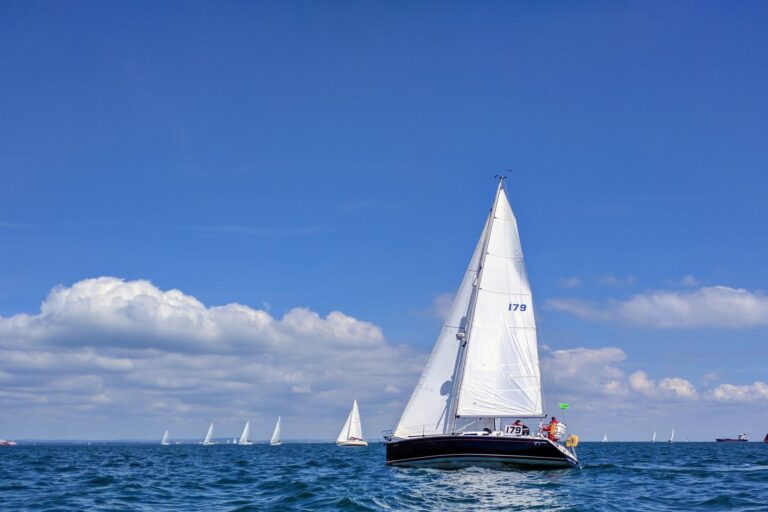
This walk is absolutely lovely. On the seaward side you have the bustling, delightful Tollesbury Marina, plenty of sailing boats of all shapes and sizes, and views across the river to the marinas of West Mersea and St Lawrence. Set against these is a thin strip of saltmarsh, and the river itself, which at some times of year is teeming with wild birds over-wintering here. On the landward side you have the borrowdyke snaking along beside you, and then the fleets criss-crossing the saltmarshes. And finally, there are points of industrial or architectural interest, such as old WW2 buildings, views of Bradwell Power Station, the Red Hills, and the remains of the old railway line. Over it all is the huge expanse of the wide Essex skies. And as you go back to the village square there are some amazing panoramic views of the river.

Directions

Download Description & Directions PDF here pdf

A. From the parking, turn right on East Street
B. At the fork in the road, turn right into Mell Road (1)
C. After 400 yards, turn left into Woodrolfe Farm lane. After a short distance the road becomes a footpath(2) continue along it until you come to the Marina.
D. At the Marina, turn right onto the sea wall.(3)
E. Continue on the sea wall, past the lightship, (4) and into the nature reserve.
F. Continue along the sea wall - there's no need for directions here, just keep going! (5)
G. You will pass Shinglehead Point - between late April and early July please do not venture onto the shingle itself because little terns, oyster-catchers and ringed plovers will be nesting there. (6)
H. Look out for the remains of the Crab and Winkle line, you can see from the level of the line how much the sea wall has been built up since the 1953 floods.(7)
I. Loop around Mill Creek (8) and continue on until you can see Rolls Farm in the distance.
J. As you approach Rolls farm you can see a track leading up from the marshes to the left of the farm - this is Prentice Hall Lane.(9)
K. Go up the lane, past Rolls Farm, until you come to Prentice Hall Farm, then take the footpath to the right, along a farm track.
L. After 400 yards the footpath goes straight ahead into some trees, although the farm track turns to the right. (10)
M. Stay on the footpath and look for a footbridge on the left (11), cross this and follow the path to the backs of some houses and turn right.
N. Continue on through a playground, then take the route past the metal barrier on the left back to Church Street.(12)
O. Follow Church Street back to the parking area.

Download Description & Directions PDF here pdf

Photos

Download PDF photo-set here pdf
1 Right fork to Mell Road 2 Tollesbury Wick 3 Tollesbury Wick
4 Tollesbury Wick 5 Tollesbury Wick 6 Tollesbury Wick
7 Tollesbury Wick 8 Tollesbury Wick 9 Tollesbury Wick
10 Tollesbury Wick 11 Tollesbury Wick 12 Tollesbury Wick

History

Trinity Lightship

Tollesbury Lightship

Tollesbury Lightship spent most of its working life off the south coast of Wales, warning shipping of the presence of the Scarweather sandbank near Porthcawl. It was retired in 1988, named "Trinity", and is now permanently moored amongst the marshes near Tollesbury. It is owned by the Fellowship Afloat Charitable Trust (FACT) and now operates as a residential centre, providing nautical activity holidays for children.

Marshes

The grazing marshes at Tollesbury Wick date from the late Middle Ages: the sea wall can clearly be seen on the Chapman and Andre map of 1777. The land was reclaimed from the sea by the construction of the sea wall: the borrowdyke, which snakes along beside the sea wall on the landward side is a ditch dug out to provide material for the sea wall. Originally the sea wall was much lower than in is today. It was raised significantly after the floods of 1953. You can see by comparison with the remains of the railway line just how much higher the wall was raised. The marshlands have been farmed for hundreds of years but much of the area has never, ever been ploughed. And today, now that the marshes are managed by the Essex Wildlife Trust, they are farmed with conservation in mind. Grazing is the traditional way of managing lowland grassland habitats and Essex Wildlife Trust uses a 'flying flock' of North Ronaldsay and Shetland sheep. Although based at Tollesbury Wick nature reserve, the rare breed sheep are taken to other Trust sites to be grazed at various times of the year.  As well as the flying flock, Tollesbury Wick has also built up a herd of rare breed Shetland cattle that are instrumental in managing the grazing marsh on the reserve along with the sheep.

SSSI

SSSIThis 600-acre site is an SSSI because of its significance as an overwintering habitat for migrating birds.

The rough pasture, which has been worked by traditional methods for decades, suits small animals such as Field Voles and Pygmy Shrews. The presence of these attracts raptors like Hen Harriers and Short-eared Owls. You should also be able to see Marsh Harriers here during the summer breeding season: although they almost became extinct in the UK during the last century their numbers are increasing, and there are now several hundred breeding pairs in the country.

The variety of habitat in the area in quite remarkable, with freshwater fleets, brackish pools and saltmarsh, and the tidal estuary of the River Blackwater; together with dry grassland on the slopes of the seawall, fresh water grazing marshes, reed beds and rough pastures. At Shinglehead Point the shingle and shells support the yellow horned-poppy. Between late April and early July please do not venture onto the shingle itself because Little Terns, Oyster-catchers and Ringed Plovers will be nesting.

Reed Warblers and Reed Buntings can be heard and sometimes seen near the reedbeds, along with a variety of dragonflies. Little Terns hunt for food in the borrowdykes, which contain ten-spined sticklebacks, prawns and eels as well as many insects. Golden Plover, Lapwing, Brent Geese and Wigeon feed and roost on the wet grassland in winter, and wading birds such as Redshank, Grey Plover, Curlew and Dunlin can be seen on the mudflats. Skylarks fly high overhead in the summer months.

Wildflowers such as Spiny Rest-harrow, Grass Vetchling, Slender Hare's Ear and plants such as Sea Lavender and Shrubby Seablight add to the richness of the local flora. In turn these support a wide variety of insects including butterflies, Bush Crickets and grasshoppers.

Dogs must be kept on a lead or under close control in the SSSI because of grazing livestock and the disturbance to wildlife.

St Mary's Church

St Marys St Mary's Church is believed to have been built around 1090, shortly after the Norman Conquest, and possibly using building materials taken from an earlier Saxon church. Many additions and alterations have taken place since that time, and the current building has a doorway and some windows dating from Tudor times, and parts of the tower date from the 17th century.

Inside the church if the famous 'swearing' font: the story goes that in 1718 the local churchwardens were so appalled by the drunken swearing of parishioner that they fined him £5 - a considerable sum in those times. With the money they commissioned a new font, and had carved on it the words 'Good people all I pray take care that in ye Church you doe not sware As this man did'. An entry in the registers for 30th August 1718 explains: "Elizabeth daughter of Robert and Eliza Wood, being ye first child which was baptised in the new font which was bought out of five pounds paid by John Norman who some months before came drunk into ye Church and cursed and talked aloud in the time of Divine Service, to prevent his being prosecuted for which he paid by agreement the above said five pounds.  Note that the wise Rhyms on the font were put there by sole order of Robert Joyce then Church Warden".

Red Hills

There are several 'Red Hills' in this part of Essex, which can be seen in the latter part of this walk. They present as low mounds of reddish earth.

They were created as a by-product of Iron Age or Roman salt making. Salt water was heated up in earthenware dishes to evaporate the water leaving residual crystallised salt. The high temperature used in this process caused oxidation and a reddening of the pottery.

Over time, broken and discarded remnants of this industry built up into quite large mounds, and the earth in the area became stained red as a result. Even where these mounds have been over ploughed, the soil retains a reddish colour.

Recently, local badgers have begun to dig a new sett in one of these red hills and are bringing to the surface pieces of earthenware that have been buried for up to 2000 years!

Crab & Winkle Line

Tollesbury was once served by the railway network, via a branch line off the main line going from Liverpool Street to East Anglia. This line was conceived around 1900, and was intended to bring the benefits of modern ways of life to this isolated pocket of Essex. At that time, before the motorcar, Tollesbury and the neighbouring villages were very remote. Local businessmen (including Arthur C. Wilkin, of the Tiptree jam factory) thought that as well as improving the access for goods and people to and from the area, there was scope for developing Tollesbury as a continental port, and so a pier was built out into the River Blackwater, and the railway line was extended right to the coast. The line to Tollesbury was opened in 1904; the extension to Tollesbury Pier opened in 1907.

The dream to develop the coastal area was always optimistic because of the nature of the terrain (low lying salt marshes). In fact it never materialised and the line itself gradually declined in popularity, partly because of the development of local bus services. The pier extension line was closed in 1921, and the branch line closed to passengers in 1951 although it was still used for freight into the 1960s. The pier itself was allowed to fall into disrepair following the closure of the line. It was then largely destroyed in 1939 as an anti-invasion policy, and what little remained was washed away in the floods of 1953. It's sobering to reflect on the fate the houses, bungalows and yacht haven would have suffered in those floods, had they been built. The pier station was, in its day, a very attractive station, although it never has enough traffic to warrant it's own station master. Instead, Jack Gallant, Station Master at Tollesbury, would ride down on the train in order to carry out the duties at Tollesbury Pier, and then ride back to Tollesbury! The pier extension line did get a second lease of life when in 1939 it was taken over by the War Department and used by four trains to service the mobile guns stationed along the estuary.