








Title: Downham |
|
|
Walk Description
|
||
Download Description & Directions PDF here
A. From St Margaret's Church car park, Castledon Road, (P) walk south along the roadside for about 150 yards to Downham Hall Farm. Turn left into the farmyard, and look for a stile on the right (1), just past the house.
B. Keeping to the northern edge of this field, cross into the next using the stile, and keeping to the north of the pond, walk roughly east. At the facing hedge there is a stile and
footbridge (2) taking you through a tiny wooded area into another field.
C. Cross this field diagonally, heading south east. Go through the field gap, and bearing slightly to the right, walk towards the hedge on the eastern side of the field so as to cut off the
north eastern corner of the field. Look for a narrow grassy track heading south eastwards through a scrubby area (3), which brings you out into a small triangular field. Keeping the hedge on your left, walk south east through this field to the far corner, and follow a track out into a by-way.
D. Turn hard left on the by-way, heading uphill and north. The track goes up fairly steeply for about a quarter of a mile (4), then bears right for a few yards before turning left to
continue north. The views from here are lovely (5), although it's a shame about the pylons.
E. Continue along the by-way for a further quarter of a mile until the track turns sharply left and you come to The Grange on your left and some more modest houses on the right.
At the first house on the right, turn right to walk down into the valley. According to the Ordnance Survey map the footpath goes along the drive and through the garden of this first house,
with a stile near the north eastern corner of the garden taking you out into the adjacent field. But when we were there, we saw a well-worn footpath on the field edge alongside the garden, and we followed that.
F. At the bottom of the valley turn right for a few yards, before crossing a footbridge on the left (6) and climbing over a stile into steep sloping meadow.
Walk uphill through this meadow and exit it via a stile, just to the right of a five barred gate (7).
G. Follow the path first right then left, to pass a private garden on your left. As the path passes the private house it disappears and you find yourself on someone's lawn (8).
Cross the lawn to the Sudbury Road. When we were here the signage was poor, making us feel like we were trespassing, but Essex County Council have since promised to restore the finger posts and improve the path.
H. Turn left on the Sudbury Road. A few yards west of the driveway, you will see a stile on the opposite side of the road. Climb over this into a field and walk west alongside the hedge for
about 50 yards, to the neatly trimmed hedge surrounding another private property. Turn right following the hedge line, then at the north-most corner of the hedge, bear left to go north east towards a field entrance.
I. The path across this field is not always clear. In the absence of a defined track, walk a couple of yards to the left of the line of telegraph poles (9).
At the far side of the field, turn right walking roughly north for almost 250 yards, keeping the hedge on your left.
J. Turn right in front of Crowsheath Wood, then left to walk north, encircling the woods. Cross through the facing hedge, then continue north, with the hedge on your left.
At the end of the field go through the next facing hedge then, still heading roughly north, walk along a footpath beside some green fencing (10).
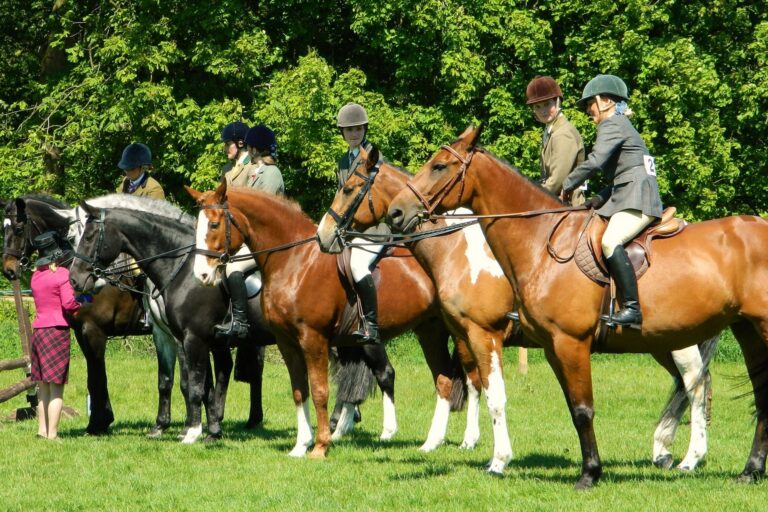
After a while the green fence stops and you are walking alongside some paddocks, complete with happy horses (photo 383 happy horses).
K. Continue out onto Hawkswood Road and turn left on the road (11), walking west, for half a mile. This road takes you past the Hanningfield Reservoir wildlife reserve, then past the
reservoir itself (12). The reservoir itself is magnificent, and there is an equally lovely lake on the south side of the road, as well.
L. At the west end on the reservoir, on the south side of Hawkswood Road (opposite the reservoir access road) is a metal gate. Go through this gate, down a couple of steps,
straight across a grassy area, to a small lane (13). Turn left on the lane and walk along for about 50 yards until you approach a house.
There is a footpath just before the house, immediately to the right of the garage. Walk along this for about 50 yards until you come to the stile; cross the stile and you are in the
Crowsheath Community Woodland.
M. Bear right to cross a small field going south west, then follow the well designated path for about two thirds of a mile (14). The path gradually swings around so that by the time you
reach the end of the woodland, your heading is roughly west.
N. As you come out onto Dowsett Lane, turn right to walk north for about 150 yards. Turn left towards Willowbank. Note the neat hedge on the right, which is followed by a small raised border.
Just before the border, there is a tatty line of trees on the left. The footpath goes behind these trees, beside a fence (15). If you come to a pleasant bungalow with two sheds outside the fence, you've gone too far.
O. Walk west along the footpath to a footbridge (16), then out into a field with a fence on the left. Follow the curve of the fence line, into Mill Lane (17).
Turn left and walk south for about a quarter of a mile, until the lovely leafy track becomes a residential road, then carry on for a further 300 yards to Heath Road and turn right.
P. Walk west along Heath Road for about 150 yards, until you come to The Nags Head. Opposite the pub, take the footpath going south over a stile, across a field and passing
to the right of a stable block (18). The path then goes through a small copse, still heading south, before emerging into a field. Keep going south through the field with the hedge on
your left, then at the far end go through a gap in the hedge and cross the next field diagonally in a south easterly direction, passing to the right of a small pond (19).
Q. In the corner of the field, cross a stile and turn left, walking east with a wooden fence on your right, to Park Lane. Turn right on the road, then bear right at the junction a few yards
later (20) to continue south along Park Lane.
R. After about a quarter of a mile, look for a metalled farm track leaving the lane on your left, adjacent to a white house (21).
Walk up the track into the farmyard and continue straight ahead past a barn on the right and a horse walker on the left, to the facing hedge where you will find another stile a few yards to your right.
S. Go over the stile, through the hedge and turn right to walk south. After 150 yards, cross through another facing hedge, and you are met with the most unexpected, amazing view.
You are at the top of Pump Hill, and can see for miles and miles, right across the fields of Essex to the east, and south, all the way to the hills of north Kent.
T. This is horsey country and the hill is divided into a series of paddocks, some temporary, some permanent. Turn left along the crest of the hill for 100 yards or so, and then navigate
your way downhill via a series of kissing gates (22), heading roughly south east towards the farm buildings you will soon see nestling in the valley.
When we were there last, the kissing gates were themselves protected by electric wire; this can be moved out of the way using the non-conductive handles provided.
U. At the bottom of the hill are the stables. Go through the farmyard with the stables on your left, then bear right to the access road (23) and walk east to Church Road.
The Fox and Hounds is immediately to the right of this access road; or to continue the walk, turn left.
V. Walk up Church Road for about 100 yards, until you are opposite the last house on the right hand side. Walk along the track to the left of this house,
leading to a 5-barred wooden gate (24), and into the field beyond. De Beauvoir Farm specialises in rare breed British White cattle which particularly docile,
and if you are lucky they may be in this field with you. Cross the field diagonally, heading north east, and exiting via a stile to the left of the gates.
Turn right on the lane (25) walking east towards De Beauvoir House.
W. As you pass De Beauvoir House the lane turns to the right for about 350 yards, before turning left to head east again and becoming much more unkempt (26).
This is a great place for black-berrying in late summer.
Continue east on this lane until you reach Castledon Road, then turn left to walk up the hill back to St Margaret's Church and the parking.
P ![]() |
1 ![]() |
2 ![]() |
3 ![]() |
4 ![]() |
5 ![]() |
6 ![]() |
7 ![]() |
8 ![]() |
9 ![]() |
10![]() |
11![]() |
12![]() |
13![]() |
14![]() |
15![]() |
16![]() |
17![]() |
18![]() |
19![]() |
20![]() |
21![]() |
22![]() |
23![]() |
24![]() |
25![]() |
26![]() |
St Margaret's Church has been so extensively restored and rebuilt over the centuries that it is hard to date the building accurately: however the tower is believed to have been built in the 15th century, whilst the rest of the church was rebuilt in 1871, re-using some of the features from an older 13th century church building. A more recent refurbishment occurred at the end of the 20th century, after a 16 year old boy deliberately set fire to the church by pouring oil on the alter and lighting it. The shell of the building was saved, but the interior had to be remodelled and the church reopened in the year 2000. The dovecote, which is 16th century, was moved to the churchyard from Downham Hall. There are some interesting trees in the churchyard, including one of the largest maples (by girth) in the British Iles and a giant redwood. Also in the churchyard is the former stone font, the bowl of which may be of a similar age to the tower.
Hanningfield reservoir was built in the early 1950's, in what was known as the Sandon Valley. It took 5 years to build at a cost of £6m, and was officially opened in 1957. Much of the land now covered by water was agricultural, including Pynnings Farm and Giffords Farm, and the grounds of one of the grand houses of Essex, Fremnells, is also now submerged. The water is up to 55 feet deep in places, and is popular with bird watchers and fishermen from across the country. The water stored here supplies 540,000 homes, serving Essex residents as far away as Barking and Southend.